
Severe toothache at night usually means the nerve of the tooth is inflamed. Root canal treatment is not "killing the tooth" — it removes the infected pulp so that you can keep your own tooth instead of having it extracted.
1. Signs that a tooth needs root canal treatment
- The tooth aches on its own, without chewing; the pain is worse at night or when lying down.
- Sensitivity to hot or cold lingers for several minutes.
- It hurts to bite, or when the tooth is tapped lightly.
- The gum next to the tooth is swollen, has a small pimple, or the tooth has darkened.
- A deep cavity, a crack, or a fracture after an injury.
Sometimes the nerve has already died and the pain stops, but the infection keeps spreading towards the root tip. Only an X-ray shows this clearly.

2. How treatment is done at HiDentist
- Examination and X-ray to see the number of canals, the shape of the roots and the extent of infection. The examination and X-ray are free.
- Local anaesthetic — you feel no pain during the procedure.
- Opening the tooth and removing the inflamed, infected pulp.
- Cleaning and shaping the canals, with antiseptic irrigation.
- Sealing the canals with a dedicated filling material so bacteria cannot return.
- Restoring the tooth with a filling or a crown.
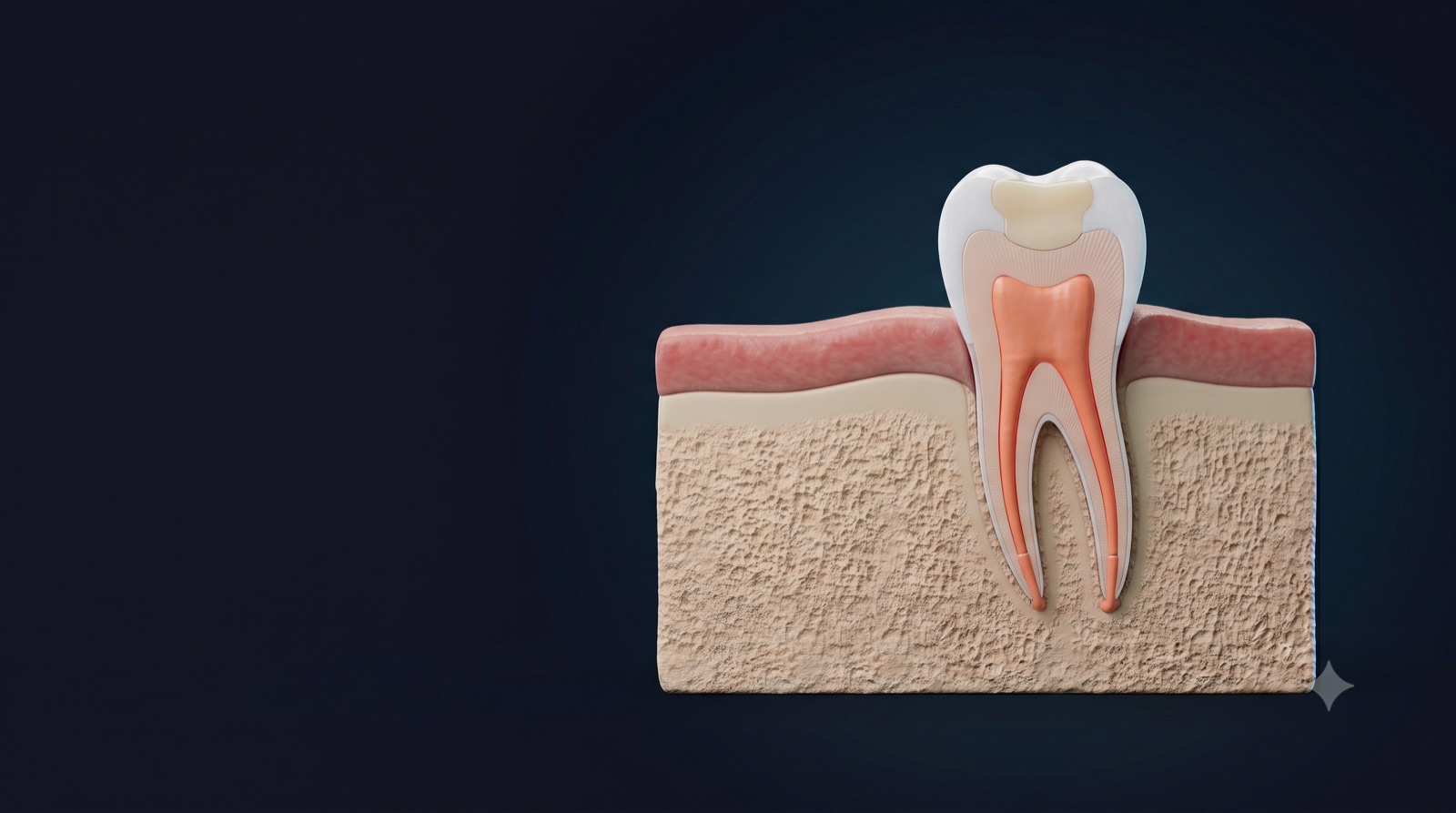
3. How many visits does it take?
Usually one to three, depending on the number of canals and how severe the infection is. A front tooth with one canal is quicker than a molar with three; a heavily infected tooth or a retreatment takes longer. The dentist will tell you the number of visits after seeing the X-ray.
4. Cost
- Tooth with 1 canal: 800,000 ₫
- Tooth with 2 canals: 1,000,000 ₫
- Tooth with 3 canals: 1,200,000 ₫
- Baby tooth: 300,000 – 500,000 ₫
- Surcharge for retreatment, severe infection, a complex tooth or MTA material: 100,000 – 800,000 ₫ per tooth
These prices do not include restoring the tooth afterwards (filling or crown). See the full price list, including approximate prices in US dollars.
5. Do you need a crown after a root canal?
A root-filled tooth has usually lost a lot of structure and is more brittle than a living tooth. For back teeth, which take most of the chewing force, dentists generally recommend a crown to prevent fracture. A front tooth with plenty of healthy structure left may only need a filling. The advice depends on the individual tooth.
6. If you are visiting Nha Trang
- Do not put up with the pain until you get home: the earlier treatment starts, the simpler it is and the better the chance of saving the tooth.
- Tell the dentist your departure date straight away, so the treatment plan fits your schedule.
- If there is no time for a crown, the tooth is closed with a filling and the crown can be done later.
- X-rays for diagnosis and consultation are free. If you want a copy to take with you (for example, for your dentist at home), there is a separate fee: panoramic X-ray 150,000 ₫, cone-beam CT 450,000 ₫.
More in Dental treatment while visiting Nha Trang.
7. Aftercare
- The tooth may feel tender when biting for a few days; ordinary painkillers are usually enough.
- Avoid chewing hard food on that side until the tooth has its final restoration.
- If swelling or pain gets worse, or a temporary filling falls out, contact the clinic straight away.
- Attend all your appointments — stopping halfway often leads to reinfection.
8. Frequently asked questions
Does it hurt?
Treatment is done under local anaesthetic, so you feel no pain during the procedure. Most patients feel much better than they did before treatment.
Wouldn't it be quicker to extract the tooth?
Extraction is quicker, but the tooth then has to be replaced, otherwise the neighbouring teeth drift and the bone shrinks — which costs far more time and money. When a tooth can be saved, keeping it is almost always the better option.
How long does a root-filled tooth last?
With well-sealed canals, a proper restoration and good oral hygiene, a root-filled tooth can last for many years.